
 barublog
In the CSR ecosystem, impact is often measured in timelines and milestones. Yet, truly transformative institutions show that sustainability is not project based, it has to be a habit.
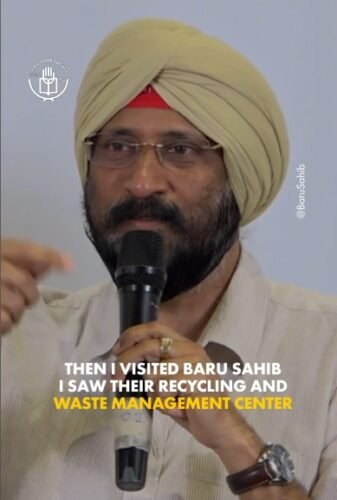
This insight was powerfully articulated by Lavinder Duggal, MD – HTL Aircon Services Pvt. Ltd., during the Mumbai Seminar, after his visit to The Kalgidhar Trust, Baru Sahib.
Sustainability Beyond the Obvious
“What we witnessed here wasn’t a one-day drive or a short-term initiative,” he observed.
“It was a habit built into the community.”
An astute observation and statement that captures why The Kalgidhar Society stands out as a compelling model for CSR leaders and corporate sustainability teams across India.
During his visit, Duggal toured the Waste Management and Recycling Centre at Baru Sahib. Despite handling waste at scale, the facility was impeccably maintained.
There were no signs of neglect, no foul smells, no pests.
“I could’t even find a single flea, though it was an expected thing at such a facility !”
More importantly, the waste collected was being converted into useful energy, reflecting a closed-loop, environmentally responsible system.
This was not sustainability as an add-on. It was sustainability embedded into everyday functioning – demonstrating an institutional mindset rather than a compliance-driven initiative.
For CSR decision-makers like HTL Aircon Services, this distinction matters notably.
Built to Endure, Not Just to Impress
Another subtle but telling observation came from the campus infrastructure.
” The residential spaces featured high-grade SS-314 stainless steel railings, chosen for durability and long-term safety.”
As an engineer, Duggal immediately recognized the significance of this choice—it reflected foresight rather than short-term cost considerations.
“What made it even more striking was consistency.
The same quality materials extended across the campus, right up to the edge of the valley.
The message was clear: what is being built here is designed to last for generations” – he observes.
Such design thinking offers an important lesson for CSR initiatives.
Long-term social impact often begins with thoughtful, durable choices made quietly and consistently.
Education at Scale – The Real CSR Multiplier
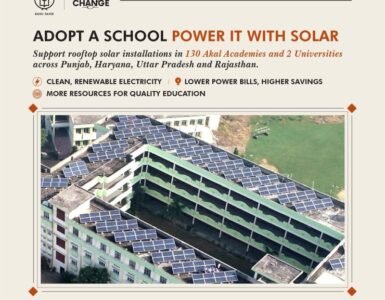
At its core, The Kalgidhar Society’s strongest contribution is rural education. The Trust runs over 130 schools, and 2 Universities – educating large numbers of children from rural and underserved communities, with a strong emphasis on girls’ education. Thousands of students receive quality education through sponsorships and infrastructure supported by CSR.
This scale, combined with disciplined governance and sustainability-driven thinking, makes the organization a highly trustworthy CSR partner.
Education here is not charity – it is a structured, long-term investment in human capital and community development.
A Call to Corporate Leaders to be a part of the Transformation
For corporates seeking meaningful CSR partnerships, The Kalgidhar Society demonstrates what happens when values are reflected not only in programs, but in operations, infrastructure, and everyday habits.
CSR has the power to enable such institutions to grow responsibly and sustainably. By supporting organizations that already embody long-term thinking, companies can ensure their CSR investments create impact that endures well beyond reporting cycles.
When sustainability becomes a habit, transformation follows naturally.





Add comment